

Few salads are as recognizable as the Caesar. Crisp romaine leaves, a creamy dressing with lemon and garlic, salty anchovies, and crunchy croutons create a combination that has survived nearly a century of culinary trends. The dish is simple, bold, and comforting in a way that feels almost universal. For many people, ordering a Caesar salad feels like choosing the safe option on a menu. It appears fresh, straightforward, and anchored in whole ingredients.
Yet for individuals exploring a low-lectin lifestyle, the traditional Caesar can quietly contain a few friction points. The croutons are typically made from wheat bread. Some versions of the dressing rely on ingredients that may introduce additional lectin exposure or digestive irritation for sensitive individuals. None of this makes the original salad “bad,” but it does create an opportunity to rethink the dish through the lens of modern lectin awareness.
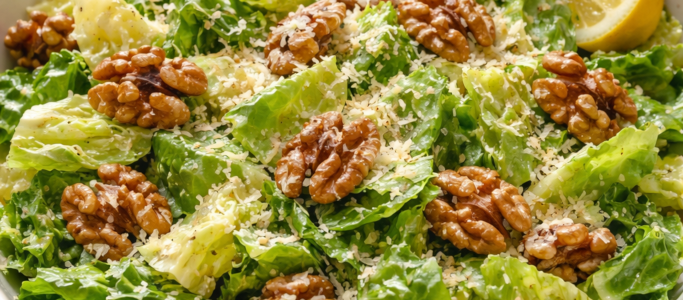
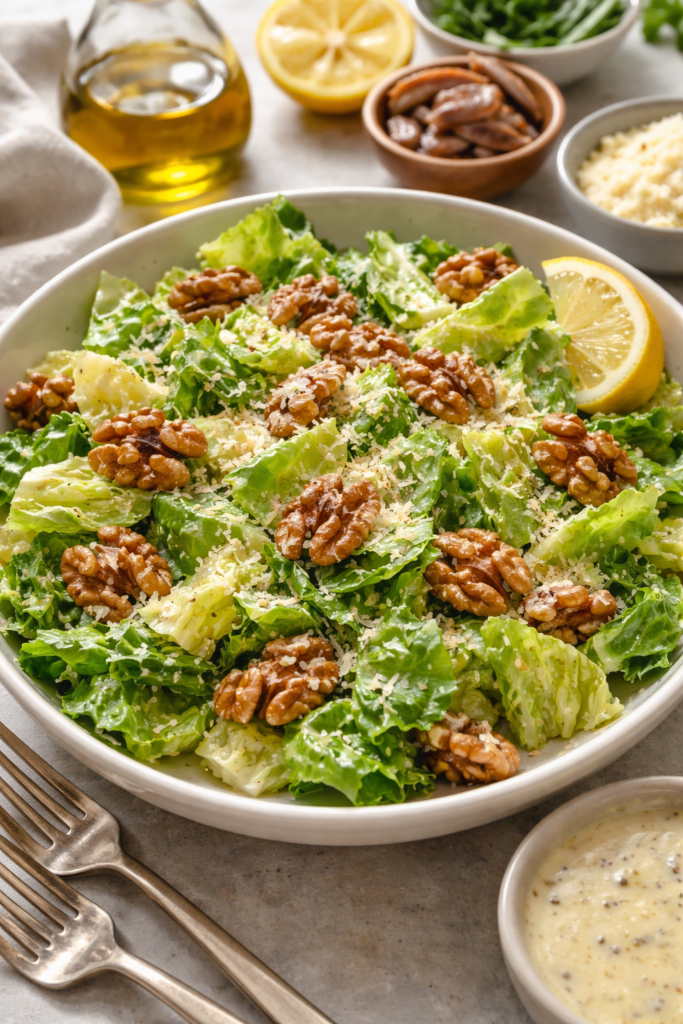
The result is something surprisingly elegant. By keeping the heart of the Caesar intact while making a few intentional substitutions, the salad becomes both lectin-conscious and deeply satisfying. A classic dressing made from egg yolks, lemon, olive oil, garlic, and anchovies remains the star. The croutons are replaced with toasted walnut halves that bring crunch, richness, and nutritional depth. The base remains the same crisp romaine hearts that made the Caesar famous in the first place.
The finished salad feels authentic, not like a compromise.
The Original Caesar Salad and Its Simple Genius
The Caesar salad traces its origins to the 1920s, most often attributed to restaurateur Caesar Cardini. Legend suggests the dish emerged from necessity when a busy holiday weekend left the kitchen with limited ingredients. Cardini combined what he had on hand into a dramatic tableside salad that quickly became iconic.
At its core, the Caesar works because it balances several sensory elements at once. The lettuce is crisp and refreshing. The dressing is creamy yet bright with lemon. Anchovies add depth and umami. Parmesan cheese provides saltiness and richness. Croutons deliver texture.
From a culinary perspective, it is a masterpiece of contrast.
However, from a lectin perspective, some of the ingredients in modern interpretations can raise questions. Wheat based croutons are the most obvious example. Wheat contains several proteins including gluten and wheat germ agglutinin, a type of lectin that can interact with the digestive system in ways that some people find irritating.
For individuals already experimenting with lectin reduction, replacing the croutons is often the easiest and most meaningful modification.
Understanding Lectins in Everyday Foods
Lectins are naturally occurring proteins found in many plants. Their biological role is primarily defensive. Plants cannot run away from predators, so they evolve chemical and structural strategies that discourage insects, animals, and microbes from eating them.
In humans, lectins interact with carbohydrates on cell surfaces. Most lectins are broken down or neutralized through traditional food preparation methods such as soaking, fermenting, sprouting, or cooking. This is one reason why many traditional cuisines developed preparation techniques that reduce lectin activity long before anyone understood the chemistry behind them.
However, certain lectins are more resilient than others. Wheat germ agglutinin in wheat is one example that has drawn attention in modern nutrition research. While most people tolerate wheat just fine, others report digestive discomfort, inflammation, or other symptoms that appear to improve when wheat intake is reduced.
This does not mean lectins are inherently toxic. The scientific literature paints a more nuanced picture. Some lectins may have neutral or even beneficial effects in certain contexts, while others may interact with the gut lining or immune system in ways that contribute to discomfort for sensitive individuals.
The low-lectin approach is therefore less about eliminating entire food groups and more about understanding preparation, dosage, and individual tolerance. In the case of Caesar salad, removing wheat croutons significantly reduces one of the most concentrated lectin sources in the dish.
Why Walnuts Make a Brilliant Replacement
When people first attempt to recreate a classic Caesar without croutons, the challenge is texture. Croutons provide crunch and a slightly toasted flavor that contrasts beautifully with the creamy dressing.
Walnut halves solve this problem remarkably well. When gently toasted, walnuts develop a deep, nutty aroma and a satisfying crispness. They also bring nutritional advantages that complement the salad rather than simply filling a gap.
Walnuts contain healthy fats, particularly alpha-linolenic acid, a plant based omega-3 fatty acid. They also provide fiber, polyphenols, and minerals such as magnesium. Research into walnuts has linked their regular consumption with potential benefits for cardiovascular health and inflammation balance.
From a culinary standpoint, walnuts also pair naturally with the anchovy-lemon profile of Caesar dressing. The nutty flavor echoes the richness of the olive oil while adding its own subtle depth.
The result is not merely a substitute for croutons but an ingredient that elevates the salad.
Romaine Lettuce and the Role of Leafy Greens
The backbone of any Caesar salad is romaine lettuce. Romaine hearts are particularly prized for their crisp structure and mild flavor. Unlike delicate greens that wilt quickly under dressing, romaine maintains its texture and holds up to the creamy emulsion.
Leafy greens like romaine are naturally low in lectins and rich in micronutrients. They provide vitamins such as folate, vitamin A, and vitamin K along with fiber and water content that support digestive health.
In the context of a low-lectin lifestyle, leafy greens often become a reliable base for meals because they offer nutritional density without many of the plant defense compounds that are more concentrated in seeds, grains, or legumes.
Romaine also contributes something less scientific but equally important. It makes the salad feel abundant and refreshing.
The Science of a Traditional Caesar Dressing
Many modern Caesar dressings rely on bottled shortcuts, but the classic preparation is essentially an emulsion. An emulsion occurs when two liquids that normally do not mix, such as oil and water, are stabilized into a unified texture. Egg yolks play a crucial role here because they contain lecithin, a natural emulsifier that allows oil to disperse evenly throughout the dressing.
The result is a creamy texture without the need for dairy. Anchovies provide umami, a savory depth that enhances the overall flavor profile. Lemon juice introduces acidity that balances the richness of the oil and egg yolks. Garlic adds aromatic intensity.
When whisked together slowly with olive oil, these ingredients create a dressing that is both luxurious and bright. From a lectin perspective, these ingredients are generally well tolerated by most people following a low-lectin approach.
A Classic Caesar Salad Recipe “Lectin-Free”
Below is a version of Caesar salad that preserves the spirit of the original while aligning with a lectin-aware approach. This recipe serves two to four people depending on portion size.
Ingredients
For the salad:
- 3 romaine hearts, chopped or torn into bite-sized pieces
- 1 cup walnut halves
- ¼ cup freshly grated Parmesan cheese
For the dressing:
- 2 large egg yolks
- 2 tablespoons fresh lemon juice
- 2 to 3 anchovy fillets, finely minced
- 1 small garlic clove, finely grated
- ½ cup extra virgin olive oil
- Salt and freshly cracked black pepper to taste
- Optional additions: Grilled chicken or salmon for extra protein
Instructions
- Toast the walnuts. – Place the walnut halves in a dry skillet over medium heat. Toast them for about three to five minutes, stirring occasionally, until they become fragrant and lightly browned. Remove from heat and let them cool.
- Prepare the dressing. – In a medium bowl, whisk together the egg yolks, lemon juice, minced anchovies, and garlic until smooth.
- Create the emulsion. – Slowly drizzle in the olive oil while whisking continuously. The dressing should gradually thicken into a creamy consistency.
- Season the dressing. – Add salt and freshly cracked black pepper to taste.
- Assemble the salad. – Place the chopped romaine hearts in a large bowl. Add the toasted walnuts and grated Parmesan.
- Dress the salad. – Pour the dressing over the lettuce and toss gently until the leaves are evenly coated.
- Serve immediately. – Top with extra Parmesan and freshly ground pepper if desired.
Small Changes That Preserve Culinary Joy
One of the biggest misconceptions about dietary adjustments is that they must be restrictive. In reality, many successful lifestyle changes come from thoughtful substitutions rather than rigid eliminations. The lectin-aware Caesar salad illustrates this principle beautifully.
Instead of abandoning the dish entirely, the recipe keeps the essential elements intact. The creamy dressing remains traditional. The romaine base remains unchanged. The anchovies still provide their signature depth.
Only one component shifts. Yet that single adjustment transforms the dish into something that better aligns with a low-lectin philosophy while still tasting authentic.
Listening to Individual Responses
Modern lectin research continues to evolve, and the scientific conversation remains complex. Not everyone reacts to lectins in the same way. Some people tolerate a wide variety of lectin containing foods without noticeable symptoms. Others find that reducing certain foods improves their digestive comfort or overall well-being.
Because of this variability, the most productive approach often involves observation and personal experimentation.
A recipe like this low-lectin Caesar salad offers a useful starting point. It removes a common lectin source while preserving nutritional balance and flavor. For someone exploring how their body responds to different foods, meals like this can provide both clarity and comfort.
Tradition Meets Modern Awareness
Food culture evolves constantly. Recipes change as ingredients move across continents, as cooking technologies develop, and as our understanding of nutrition grows. The Caesar salad itself is a product of this evolution. What began as a spontaneous combination of ingredients in a restaurant kitchen became one of the most recognized salads in the world.
Adapting it to a lectin-aware approach continues that tradition of culinary creativity. The heart of the dish remains exactly where it always was. Crisp romaine leaves. A bright, creamy dressing. Rich savory accents. A satisfying crunch.
Only the details have shifted. And sometimes, those small shifts are all it takes to make a familiar meal feel both nourishing and new.