


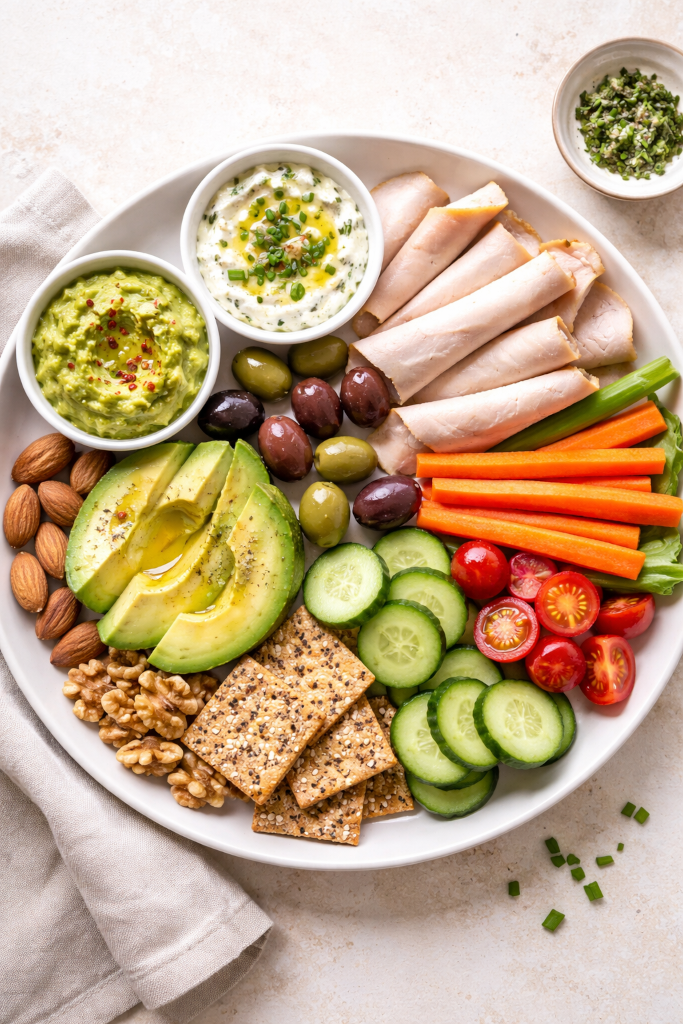
Long days have a way of exposing the weak points in our eating habits. Skipped meals turn into frantic snacking. Energy dips arrive just as focus is needed most. Convenience starts to outweigh intention, and before we realize it, we are grabbing whatever is closest rather than what actually supports our bodies. For people trying to reduce lectin exposure, these moments can feel especially challenging. Many packaged snacks rely on grains, legumes, or additives that quietly reintroduce the very compounds they are trying to avoid.
Low-lectin snack plates offer a different approach. Instead of thinking in terms of “snack foods,” they reframe the idea of eating between meals as a smaller, intentional meal built from simple components. These plates are not about restriction or perfection. They are about creating steadiness and keeping blood sugar stable, supporting digestion, and avoiding the cycle of hunger and irritation that so often accompanies long stretches without proper nourishment.
This concept fits naturally into the philosophy behind Living Low-Lectin: small, repeatable choices matter more than dramatic overhauls. When the day stretches on and mental or physical energy begins to thin, what we reach for can either reinforce resilience or quietly undermine it.
Why Snacking Matters More Than We Think
Snacking is often framed as a problem, but the issue is rarely the act of eating between meals itself. The problem is the type of foods we are encouraged to snack on. Modern snack culture favors portability and shelf stability over biological compatibility. Bars, crackers, and processed “health foods” often contain lectins from wheat, corn, soy, or legumes, along with emulsifiers that may further irritate the gut lining.
From a physiological perspective, long gaps without food can increase stress hormone output, particularly cortisol. This stress response can worsen digestive sensitivity and amplify inflammatory reactions. For individuals already navigating lectin-related issues, the combination of stress hormones and reactive foods can create a feedback loop that leaves them feeling foggy, bloated, or fatigued.
Low-lectin snack plates interrupt this cycle. By providing modest but meaningful nourishment, they help maintain metabolic balance without overwhelming digestion. They also remove the urgency that leads to poor food decisions later in the day.
The Lectin Connection in Between Meals
Lectins are carbohydrate-binding proteins found widely in plants. Their role in plant defense is well established, and modern research continues to explore how they interact with human tissues. Some lectins resist digestion, bind to gut epithelial cells, and influence immune signaling in susceptible individuals. While not everyone reacts the same way, those who do often notice patterns that correlate with certain foods and preparation methods.
Snacks are a common blind spot in this equation. Someone may carefully plan low-lectin meals, only to unknowingly undo that effort with convenience foods eaten in haste. Snack plates reduce this risk by relying on whole foods with naturally low lectin content or foods whose lectins are minimal and well tolerated.
Importantly, this approach does not require exotic ingredients or rigid rules. It leans on simplicity and familiarity, which makes it sustainable during busy or unpredictable days.
What Makes a Snack Plate “Low-Lectin”
A low-lectin snack plate is not defined by a specific ratio or macronutrient target. Instead, it follows a few guiding principles that keep the focus on digestibility and stability.
First, the foods are minimally processed. Whole foods are easier to evaluate and control than packaged snacks with long ingredient lists. Second, the components are naturally low in problematic lectins or prepared in ways that reduce lectin activity. Third, the plate provides enough substance to feel grounding without becoming heavy.
These plates often include a combination of fats, gentle proteins, and fibrous vegetables or fruits. This balance slows digestion just enough to sustain energy while avoiding the blood sugar spikes that can trigger cravings or crashes.
Building Energy Without Overstimulation
One of the quiet benefits of low-lectin snack plates is their effect on mental clarity. Many people report that processed snacks give a brief lift followed by a noticeable drop in focus. This rollercoaster effect is often blamed on sugar alone, but lectins and additives may also play a role by irritating the gut-brain axis.
Snack plates built around whole foods tend to provide steadier energy. Fats such as olive oil or avocado support satiety and help slow carbohydrate absorption. Gentle proteins help maintain muscle metabolism without triggering digestive stress. Non-starchy vegetables provide texture and micronutrients without overwhelming the system.
Over time, this steadiness can change how long days feel. Instead of pushing through waves of fatigue, people often describe a more even sense of alertness that makes both physical tasks and mental work more manageable.
The Role of Preparation and Environment
One overlooked aspect of snacking is context. Eating quickly at a desk or in a car sends a very different signal to the nervous system than eating intentionally, even if the food is the same. The digestive system responds not only to what we eat, but to how we eat it.
Snack plates naturally encourage a pause. Arranging a few items on a plate or container, even briefly, creates a moment of transition. This small ritual can activate the parasympathetic nervous system, improving digestion and reducing stress-related symptoms.
Preparation also matters. Washing and cutting vegetables ahead of time, portioning proteins, or keeping simple staples on hand reduces friction when hunger hits. The easier it is to assemble a snack plate, the more likely it is to become a default choice rather than a special effort.
Adapting Snack Plates to Different Long Days
Not all long days look the same. Some are physically demanding, others mentally draining, and many are a mix of both. Low-lectin snack plates are flexible enough to adapt to these variations.
On physically active days, plates may lean slightly heavier, with more protein or fats to support muscle recovery and sustained movement. On mentally focused days, lighter plates that emphasize hydration and gentle energy can feel more appropriate. The key is responsiveness rather than rigidity.
This adaptability aligns with emerging research suggesting that metabolic needs fluctuate daily based on activity, stress, sleep, and circadian rhythms. A one-size-fits-all snack rarely fits anyone well.
Digestive Calm as a Long-Term Strategy
For individuals exploring a low-lectin lifestyle due to digestive discomfort, snack choices can have outsized effects. Small irritations repeated throughout the day may cumulatively stress the gut lining more than a single larger exposure. Snack plates help minimize these repeated insults.
Many people notice that when snacks are simplified and lectin exposure reduced, bloating and discomfort decrease even without dramatic changes to main meals. This suggests that frequency and timing may matter as much as quantity.
Over time, reducing digestive noise can make it easier to identify true triggers and respond thoughtfully rather than reactively.
Social and Practical Considerations
Snack plates also translate well to social situations. Sharing a plate of simple, whole foods feels more natural than explaining why certain packaged snacks are off limits. This can reduce the social friction that sometimes accompanies dietary changes.
Practically, snack plates scale well. They can be assembled at home, packed for travel, or improvised from grocery store options. This flexibility makes them particularly useful during long workdays, road trips, or events where meal timing is unpredictable.
Moving Away From the “Snack Food” Mindset
Perhaps the most meaningful shift that low-lectin snack plates encourage is psychological. They move eating away from the idea of indulgence or guilt and toward nourishment and support. Snacking becomes a proactive choice rather than a reactive one.
This mindset change can ripple outward. When people stop labeling foods as “good” or “bad” and instead focus on how foods make them feel over time, eating becomes less stressful and more intuitive. Long days no longer feel like endurance tests, but like manageable stretches supported by intentional care.
Bringing It All Together
Low-lectin snack plates are not a trend or a rigid protocol. They are a practical tool rooted in an understanding of how modern food systems, plant biology, and human physiology intersect. By emphasizing whole foods, gentle preparation, and mindful timing, they offer a way to navigate long days without sacrificing digestive comfort or energy.
For those living a low-lectin lifestyle, these plates provide consistency. For those just beginning to explore how lectins affect them, they offer a low-pressure entry point. And for anyone tired of the snack-crash cycle, they represent a return to something simple and sustainable.
In the end, the power of a snack plate lies not in perfection, but in repetition. Small, steady choices made throughout long days can quietly reshape how the body feels, responds, and recovers. That quiet consistency is often where real change begins.