A busy evening can turn dinner preparation into a lengthy process, particularly when following a low-lectin lifestyle. Ingredients need to be selected carefully, familiar recipes sometimes require modifications, and convenience foods may contain wheat, soy, legumes, or other ingredients someone prefers to limit. By the time vegetables are chopped, proteins are prepared, and several pots are heating, a simple home-cooked meal can require more attention than the evening allows.
One-pan dinners offer a practical way to simplify that routine. A sheet pan filled with seasoned chicken and vegetables or a skillet of sautéed seafood and greens can provide a satisfying meal without separate cooking stations for every component. Fewer cooking vessels also mean less cleanup, making it easier to prepare dinner at home on evenings when energy and time are limited.
The greatest advantage comes from learning how ingredients behave together. Different vegetables release different amounts of moisture, proteins require particular cooking temperatures, and seasoning methods influence how flavors develop. Understanding those details makes it possible to prepare dependable low-lectin meals from ordinary groceries without following an elaborate recipe every night.
Why One-Pan Cooking Works for Low-Lectin Meal Planning
Low-lectin cooking often emphasizes recognizable ingredients and preparation methods that can be controlled at home. Fresh poultry, seafood, meat, eggs, and a variety of vegetables provide the foundation for meals that do not depend on wheat-based pasta, conventional breading, or bean-heavy sauces. Building dinner around these foods can simplify shopping because the same ingredients work across several cooking styles.
A sheet-pan meal might pair chicken thighs with cauliflower, carrots, and rosemary. Those same vegetables can be prepared in a skillet with ground turkey, mushrooms, and garlic on another evening. Changing the protein, seasoning, and cooking method provides variety without purchasing an entirely different collection of groceries.
The low-lectin approach also benefits from understanding what cooking can and cannot accomplish. Lectins are carbohydrate-binding proteins with different characteristics depending on their biological source, and certain cooking methods can reduce the activity of specific lectins. Harvard T.H. Chan School of Public Health explains these distinctions in its review of lectins and food preparation, while acknowledging that human evidence concerning the broader health effects of dietary lectins remains limited.
Selecting ingredients that already fit a preferred dietary pattern is often easier than attempting to make every ingredient suitable through additional processing. For example, cauliflower can replace a conventional grain-based side dish when that substitution fits the meal, while roasted winter squash provides a different texture and a more substantial carbohydrate contribution. Neither ingredient requires a complicated preparation process to become part of a satisfying dinner.
Start With Ingredients That Have Compatible Cooking Times
The difference between a successful one-pan dinner and a disappointing one often comes down to timing. Thick chicken thighs, small shrimp, cauliflower florets, and leafy greens cannot all be expected to finish cooking simultaneously. Combining them without accounting for their differences can leave some ingredients overcooked while others remain unfinished.
Dense vegetables such as carrots, parsnips, and winter squash generally need more cooking time than zucchini, mushrooms, asparagus, or spinach. Cutting vegetables into reasonably uniform pieces improves consistency, but size adjustments alone cannot make every ingredient cook at the same rate. Adding faster-cooking foods later is usually the better approach.
Consider a sheet pan containing chicken thighs, cauliflower, and asparagus. The cauliflower may benefit from a head start, while asparagus can be added later so it retains some firmness. Chicken placement and cooking time should be determined by the size and cut of the poultry, with a thermometer used to establish when it is fully cooked.
Skillet cooking follows similar principles. Ground meat can be browned first, followed by vegetables that require more time to soften. Delicate greens can enter the skillet near the end, when the remaining ingredients are nearly finished and the accumulated cooking juices can help them wilt.
These small changes allow one cooking vessel to accommodate foods with different requirements. Once the sequence becomes familiar, preparing the meal requires less active decision-making.
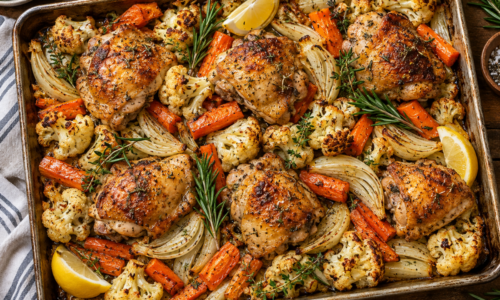
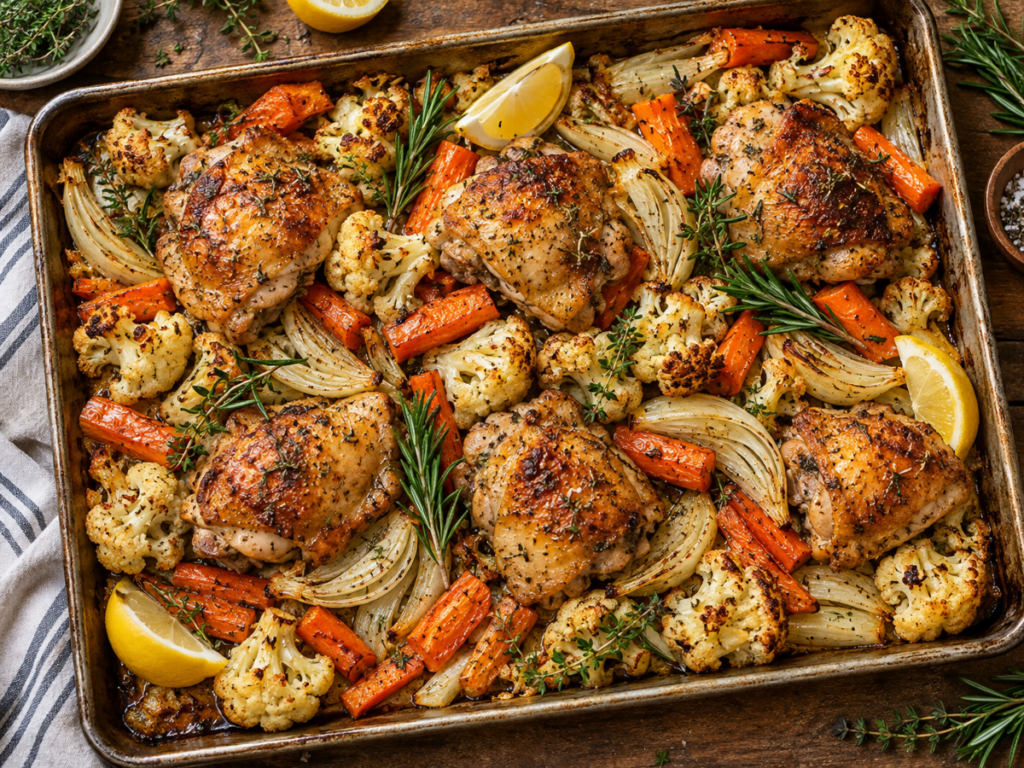
Sheet-Pan Chicken With Cauliflower, Fennel, and Herbs
Chicken is one of the more adaptable proteins for a sheet-pan dinner because it pairs comfortably with a wide range of vegetables and seasonings. Boneless thighs have enough natural fat to remain relatively moist during roasting, while chicken breasts offer a leaner option that benefits from careful monitoring. Both work well with olive oil, garlic, rosemary, thyme, and fresh lemon.
Cauliflower and fennel make a particularly useful combination. Cauliflower develops browned edges and a slightly nutty roasted flavor, while fennel softens and becomes sweeter as its sharp raw flavor mellows. Carrots can be added for additional color and sweetness, although their density may require smaller pieces or an earlier start.
A light coating of olive oil helps distribute seasoning and encourages the vegetables to brown. Arrange the ingredients across a large rimmed baking sheet rather than crowding them together, leaving room for moisture to evaporate. If the cauliflower requires more time than the chosen chicken cut, begin roasting it separately before adding the poultry.
Fresh lemon juice and chopped parsley can be added after cooking to brighten the richer roasted flavors. The chicken should reach an internal temperature of 165°F (74°C), measured in its thickest portion. Using a thermometer allows the vegetables and chicken to be checked independently without relying on appearance alone.
One-Skillet Ground Turkey With Cabbage and Mushrooms
Ground turkey offers an efficient starting point for stovetop dinners because it browns directly in the skillet and distributes easily among chopped vegetables. It also works with several seasoning combinations, from garlic and rosemary to ginger and lime. A broad skillet is preferable because the meat has more opportunity to brown rather than steam in its released moisture.
Cabbage is particularly useful for this type of meal. It can be shredded quickly, purchased pre-cut, or sliced ahead of time and refrigerated for a later dinner. As cabbage cooks, it becomes tender while retaining some structure, making it a practical foundation for a substantial skillet meal.
Begin by browning the ground turkey and breaking it into small pieces. Mushrooms can be added once the turkey has developed some color, followed by shredded cabbage and a little unsalted broth or water if the skillet becomes dry. Garlic and ginger work well with this combination, while chopped green onions provide a fresh finishing flavor.
Ground turkey must reach 165°F (74°C), including when it is mixed with vegetables. If the turkey finishes cooking before the vegetables are tender, it can remain in the skillet while the remaining ingredients cook, provided the heat is managed to avoid drying it excessively. The finished meal should contain tender cabbage, well-cooked meat, and enough moisture to bring the ingredients together without becoming soupy.
For an Asian-inspired variation, a little coconut aminos can provide savory sweetness in place of conventional soy sauce. Coconut aminos vary in sodium, sugar content, and flavor intensity, so the amount should be adjusted to the particular product. Fresh lime juice can also provide a pleasant contrast without requiring a prepared sauce.
Garlic Salmon With Asparagus and Mushrooms
Salmon is well suited to a simple sheet-pan dinner because its naturally rich flavor requires relatively little additional seasoning. Olive oil, garlic, dill, parsley, and lemon provide a familiar combination, while asparagus and mushrooms create a vegetable accompaniment that cooks without extensive preparation.
The vegetables should be arranged around the fish rather than piled beneath it. Mushrooms release moisture during heating, and adequate space helps prevent the entire pan from becoming excessively wet. Thick asparagus spears may be better suited to roasting alongside salmon than very thin ones, which can soften quickly.
If the vegetables need additional cooking time, they can begin roasting before the salmon is added. The fish should be placed on the baking sheet when the vegetables are approaching the desired tenderness, then cooked until it reaches the recommended safe internal temperature of 145°F (63°C). A thick fillet will require more time than a thin portion, so checking the actual fish is more reliable than following a fixed schedule.
Fresh lemon juice added just before serving complements the richness of the salmon and the earthy flavor of the mushrooms. A small amount of chopped dill or parsley can finish the dish without another cooking step. When using frozen salmon, it should be properly thawed before preparing this style of dinner so the vegetables and fish cook more predictably.
Shrimp With Broccoli, Zucchini, and Garlic
Shrimp provides another useful option for evenings when dinner needs to be prepared with relatively little active cooking. Peeled and deveined shrimp eliminates a substantial part of the preparation, especially when purchased frozen and thawed safely in advance. The main challenge is coordinating its short cooking time with vegetables that need longer exposure to heat.
Broccoli and zucchini work well together, although they behave differently in the skillet. Broccoli may need a brief period of covered cooking with a small amount of water to become tender, while zucchini releases moisture and softens quickly. Cooking the broccoli first allows both vegetables to approach the desired texture before the shrimp is introduced.
Garlic can be added once the vegetables are nearly ready, allowing it to become fragrant without spending too long over direct heat. The shrimp should then cook until its flesh is pearly and opaque, with turning as needed for even cooking. Leaving shrimp over heat after it is done can produce a firm, rubbery texture.
A squeeze of lemon and a little chopped parsley provide a clean finish. For additional richness, a small amount of olive oil can be stirred through the vegetables after cooking. The combination works without pasta or a separate grain, although a suitable roasted root vegetable or other preferred side can be included when a more substantial meal is needed.
Beef and Mushroom Skillet With Wilted Greens
Thinly sliced beef provides another way to build a satisfying one-pan dinner around familiar ingredients. Sirloin or another tender cut can be sliced across the grain so it cooks quickly, while mushrooms contribute an earthy flavor that complements the browned meat. Chopped kale or spinach adds a green vegetable without requiring a separate pot.
The skillet should be heated sufficiently to brown the beef without allowing it to release excessive moisture and simmer. Cooking the meat in batches may be necessary when preparing a larger quantity, especially if the pan is relatively small. Once cooked appropriately, the beef can be transferred to a clean plate while the mushrooms are sautéed in the same skillet.
Mushrooms initially release water, but their flavor becomes more concentrated as that moisture evaporates. Garlic and fresh thyme can be added after the mushrooms begin to brown, followed by chopped greens and a little unsalted broth. The greens should be cooked until tender, with spinach requiring considerably less time than mature kale.
The beef can return to the skillet near the end, along with any accumulated juices, and the finished dish can be seasoned with black pepper and fresh herbs. Whole cuts of beef cooked as steaks should reach 145°F (63°C) followed by a three-minute rest under federal food-safety guidance. Thinly sliced beef requires attention to its final temperature and handling, particularly when the pieces vary in thickness.
Develop Flavor Without Adding More Cooking Steps
Simple seasonings can change the character of a meal without requiring several bowls of sauce ingredients. Rosemary, thyme, and garlic create a familiar roasted flavor, while ginger, turmeric, and lime work well with lighter skillet preparations. Fresh herbs added near the end introduce a different aroma than dried herbs cooked with the main ingredients.
The order of seasoning can influence the finished result. Dried herbs often tolerate cooking alongside vegetables and proteins, while delicate fresh herbs may lose much of their aroma during prolonged heating. Finely minced garlic can burn quickly on a hot baking sheet, so mixing it with oil, using larger pieces, or adding it later can help prevent bitterness.
Pan juices can also become part of the seasoning. After sautéing mushrooms or meat, a small amount of unsalted broth or water can loosen the flavorful browned bits from the skillet. Allowing this liquid to reduce slightly produces a light coating for the ingredients without preparing a separate sauce.
Acidic ingredients are useful for finishing richer foods. Lemon juice can brighten chicken, fish, and broccoli, while a small amount of apple cider vinegar complements cooked cabbage and roasted root vegetables. Adding these ingredients gradually makes it easier to preserve the original flavors rather than overwhelming them.
Organize Grocery Shopping Around Repeatable Combinations
A one-pan dinner becomes easier when most ingredients are already familiar. Instead of purchasing groceries for five unrelated recipes, selecting several vegetables that can be used with different proteins reduces both shopping decisions and the chance of unused produce spoiling in the refrigerator.
Cauliflower, cabbage, mushrooms, and carrots are versatile examples. Cauliflower can be roasted with chicken, mushrooms can accompany beef or fish, and cabbage can be cooked with ground turkey or pork. Changing the herbs and seasonings helps prevent those recurring ingredients from producing nearly identical meals.
Pre-cut vegetables offer another practical option when preparation time is limited. Shredded cabbage, trimmed broccoli, sliced mushrooms, and prepared cauliflower florets can remove much of the chopping associated with dinner. They often cost more than whole produce, so the convenience may be best reserved for especially busy days.
Frozen vegetables can also be useful, although their moisture content affects cooking results. Broccoli and cauliflower that have been frozen may become softer than their fresh counterparts, particularly when crowded into a pan. Spreading them across a baking sheet and allowing moisture to evaporate can improve their texture, while some vegetables may be better suited to a covered skillet preparation.
Produce preparation should remain straightforward and safe. The FDA recommends washing fresh fruits and vegetables under running water, keeping pre-cut produce refrigerated, and separating foods eaten raw from uncooked meat, poultry, and seafood. Pre-washed vegetables labeled ready to eat generally do not require additional washing when handled according to their packaging.
Use a Preparation Routine That Reduces Cleanup
A simple cooking sequence can prevent much of the mess that accumulates during meal preparation. Begin with clean equipment and prepare vegetables before handling raw meat or poultry. This reduces the need to repeatedly wash knives, cutting boards, and nearby surfaces while assembling dinner.
Arrange ingredients by when they will enter the pan. Dense vegetables can be prepared first, followed by proteins and delicate vegetables that cook more quickly. Keeping seasonings nearby also avoids searching through cabinets after the cooking process has begun.
The choice of cookware influences how efficiently the ingredients cook. Rimmed baking sheets help contain roasting juices, while heavy skillets distribute heat more evenly than very thin cookware. A skillet with a properly fitting lid is useful when vegetables need a brief covered cooking stage before browning.
Parchment paper can simplify sheet-pan cleanup when it is appropriate for the recipe and rated for the oven temperature being used. It may limit direct contact between food and the metal surface, which can slightly change browning. For meals that depend on a deeply browned surface, cooking directly on a lightly oiled pan may produce a preferable result.
One-pan cooking still requires sensible food handling. Raw poultry juices should not contaminate utensils or garnishes intended for immediate serving, and vegetables that contact raw meat must receive sufficient cooking. A clean serving plate should always replace any plate previously used to hold uncooked meat.
Keep Food Safety Separate From Dietary Preferences
A low-lectin approach does not change established food-safety requirements. Properly cooking meat, poultry, seafood, and other perishable ingredients remains necessary regardless of the vegetables or seasonings used alongside them. The FoodSafety.gov internal temperature chart provides recommended temperatures for different proteins, including 165°F (74°C) for poultry and 160°F (71°C) for ground beef and ground pork.
Some ingredients associated with lectin discussions also require specific preparation for safety. Raw or inadequately cooked kidney beans contain phytohaemagglutinin, a lectin capable of causing gastrointestinal illness. The FDA’s guidance on naturally occurring toxins in foods explains that properly cooked and canned kidney beans contain sufficiently low levels of this lectin for normal consumption.
A sheet pan or ordinary skillet should not be treated as a substitute for proper dried-bean preparation. Dried kidney beans must undergo an appropriate soaking and boiling process before they can safely be included in another dish. Canned beans have already been heat processed, although someone following a low-lectin diet may still choose to limit them according to personal dietary preferences.
These distinctions matter because reducing measured lectin activity and preventing foodborne illness are separate considerations. Appropriate preparation can address specific hazards without implying that every lectin-containing food needs to be avoided or that ordinary roasting eliminates all lectin activity.
Turn One-Pan Dinners Into Practical Leftovers
Preparing additional portions can make the following day’s meals easier, particularly when the ingredients reheat well. Roasted chicken, carrots, cauliflower, and cabbage often maintain a useful texture after refrigeration, while delicate fish and zucchini may become noticeably softer. Choosing ingredients with leftovers in mind can reduce the need to cook a completely separate lunch.
Cooked ground turkey with cabbage and mushrooms can be reheated and served in lettuce leaves or alongside leftover roasted vegetables. Chicken can be sliced into a warm vegetable bowl, while roast beef may be combined with freshly sautéed greens. These adjustments create a different meal from ingredients that have already received most of their preparation.
Proper cooling and storage remain necessary. The USDA’s food-safety guidance for leftovers recommends placing cooked leftovers in shallow containers, refrigerating them promptly, using most refrigerated leftovers within three to four days, and reheating them to 165°F (74°C). Perishable foods should not remain at room temperature for more than two hours, or one hour when temperatures exceed 90°F (32°C).
Storing fresh garnishes and finishing ingredients separately can help preserve flavor. Lemon juice, herbs, and other delicate additions are often better incorporated just before eating, particularly when reheating roasted vegetables or cooked meats. This keeps the second meal from tasting like a fully reheated version of the first.
Build a Small Collection of Flexible Weeknight Meals
A dependable dinner routine can begin with only a few combinations. Roasted chicken with cauliflower, ground turkey with cabbage, and salmon with asparagus provide different flavors and textures while relying on similar preparation habits. Familiarity with these meals makes it easier to adjust quantities, substitute vegetables, and recognize when an ingredient needs more or less cooking time.
Seasonal availability can provide additional variation without requiring a new cooking technique. Cooler months may favor roasted fennel, carrots, cauliflower, and winter squash, while warmer months offer opportunities to prepare asparagus, zucchini, and mushrooms in quicker skillet meals. Choosing produce that is reasonably priced and readily available can also keep the routine manageable.
Some meals may benefit from an additional carbohydrate source, particularly for people with greater energy needs. Roasted sweet potatoes, winter squash, or other suitable root vegetables can help make a protein-and-vegetable dinner more filling. The specific choice depends on the individual’s dietary framework, nutritional needs, and tolerance, rather than an assumption that every low-lectin meal should eliminate starch.
Once the basic cooking methods become familiar, small changes can produce useful variety. A skillet of turkey and cabbage can take on a different character with rosemary and mushrooms than it does with ginger and coconut aminos. Chicken roasted with fennel and lemon will taste different from the same cut prepared with garlic, thyme, and winter squash.
The most practical arrangement is one that fits the available time, cookware, ingredients, and number of people being served. A large sheet pan may be appropriate for a family dinner, while a single skillet can be more convenient for one or two portions. Keeping those preparations adaptable allows weeknight cooking to remain manageable even when the grocery selection, schedule, or appetite changes.