

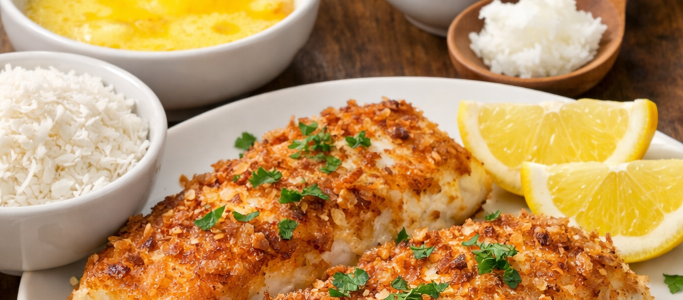
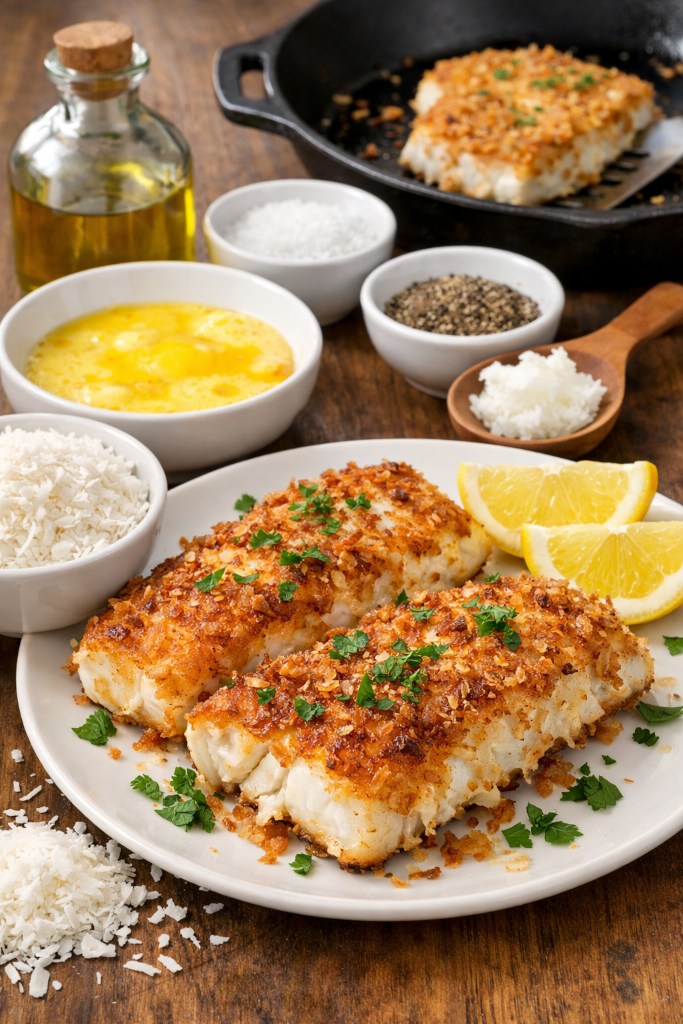
There is a certain kind of comfort that comes from a golden crust. Not the heavy, bready kind that leaves you feeling like you need a nap on the couch. More like the clean crunch that tells your brain, “Yep, this is real food,” while your stomach quietly says, “Thank you for not making this complicated.”
That is exactly why coconut-crusted white fish fits so well into a lectin-aware kitchen. It scratches the same itch as breaded cod, fish sticks, or a crispy seafood plate at a diner, but it does it without flour, without breadcrumbs, and without that whole grain-based “coating architecture” that often shows up alongside higher lectin exposure.
The trick is simple: you are still building a crust, you are just building it with something that behaves differently in the body and in the pan.
A quick, real-world refresher on lectins
Lectins are carbohydrate-binding proteins found widely in nature, especially in plants. In plants, they are often part of a defense strategy, helping the plant respond to predators, pests, and microbes.
In humans, the story is more nuanced than “lectins are evil” or “lectins do nothing.” We have strong evidence that some lectins can cause problems when foods are undercooked or improperly prepared, with the classic example being certain raw or undercooked beans that can trigger significant gastrointestinal distress.
At the same time, a lot of the lectin conversation gets messy because it mixes three separate truths:
- Some lectins are clearly problematic when active and consumed in the wrong form (like improperly cooked high-lectin legumes).
- Many traditional cooking methods reduce lectin activity significantly (soaking, boiling, pressure cooking, fermentation, sprouting).
- Human responses vary, and some people seem especially sensitive, often noticing symptom patterns even when foods are “normally prepared.”
That third point matters for real life. Your body does not debate nutrition on the internet. It responds to inputs, and patterns are what drive practical decisions.
So rather than trying to make coconut crust into some moral victory, it is better to see it as a strategic swap: a way to keep the experience of crunchy comfort while staying aligned with a lower-lectin approach.
Why this recipe makes sense in a lectin-aware kitchen
Most conventional breading is built on wheat flour, cornmeal, or breadcrumb coatings. Those ingredients are common, cheap, and effective, but they also stack several lectin-related variables at once: grains, processing aids, and sometimes seed oils used for frying. Coconut gives you something different.
Unsweetened shredded coconut crisps up quickly, browns beautifully, and creates a crust that is naturally gluten-free and grain-free. Coconut is not completely “lectin free” in the strict scientific sense (almost no plant food is), but in lectin-aware circles it is typically treated as a safer option compared with many grains and legumes, especially when you are using it as a coating rather than eating huge amounts of it.
And then there is the fish itself. White fish like cod or halibut is mostly protein, mild in flavor, and generally easy to digest for many people. It is also a practical way to get nutrient density without building your meal around ingredients that commonly cause trouble for sensitive guts.
Fish provides several nutrients people care about, including high-quality protein and micronutrients, and health agencies like the FDA note fish as a useful source of nutrients like protein, B12, vitamin D, and selenium (while also emphasizing smart choices around seafood). So the plate ends up feeling like comfort food, but it is built on a very different foundation.
Breaded food is really just a three-part engineering project:
- Something wet to help the coating stick
- Something textured to form a crust
- Heat management so it browns without burning
Egg handles the “stick” role perfectly. Coconut handles the texture. And coconut oil handles heat in a way that pairs nicely with coconut’s flavor.
The only real risk is burning the coconut before the fish cooks through. Coconut browns fast, so the method is not “blast it on high.” It is “medium heat, steady control, flip once, finish gently.”
When people struggle with this recipe, it is usually not the ingredients. It is heat discipline.
Coconut-Crusted White Fish (Low-Lectin, Grain-Free)
Servings: 2 (or 4 if you’re pairing with hearty sides and using larger fillets as shared portions)
Ingredients
- 2 cod or halibut fillets (about 5 to 7 oz each, patted dry)
- 1 large egg, whisked well
- 1 to 1½ cups unsweetened shredded coconut (fine or medium shred works best)
- ½ tsp sea salt (plus more to taste)
- ¼ tsp black pepper
- ½ tsp garlic powder (optional)
- ½ tsp paprika (optional, use if tolerated)
- 2 to 3 tbsp coconut oil, for pan-frying
- 1 lemon, cut into wedges
- Optional finish: chopped parsley or chives
Directions
- Dry the fish well. This matters. Moisture blocks crisping. Pat both sides with paper towel.
- Season the coconut. In a shallow bowl, mix shredded coconut with salt, pepper, and any optional spices.
- Set up a quick coating station.
- Bowl 1: whisked egg
- Bowl 2: seasoned coconut
- Coat the fish. Dip each fillet in egg, let excess drip off, then press into coconut. Use your hands to gently pack coconut onto the surface so it actually adheres.
- Heat the pan. Add coconut oil to a skillet over medium heat. You want it shimmering, not smoking.
- Pan-fry. Place fillets in the pan and cook 3 to 5 minutes per side, depending on thickness, until the crust is golden and the fish flakes easily.
- Rest briefly. Move to a plate and let it sit 2 minutes. This helps the crust set.
- Finish. Squeeze lemon over top and add herbs if you want that bright, clean contrast.
Simple lectin-aware sides (optional ideas)
If you want the “fish-and-sides” vibe without leaning on grains: sautéed zucchini, cauliflower mash, a crisp cucumber salad, or simple steamed greens with olive oil and lemon.
Small upgrades that make it feel restaurant-level
A lot of lectin-aware cooking gets labeled “healthy,” but the real goal is “satisfying.” These small touches help:
- Lemon at the end: acidity cuts richness and makes the crust pop.
- A quick pan sauce: after removing fish, add a splash of lemon juice and a spoon of coconut milk, scrape browned bits, simmer 60 seconds, spoon over fish.
- Texture control: if your coconut shreds are very long, pulse them a few times so the crust is tighter and less likely to fall off.
Why preparation still matters, even when you are avoiding the usual suspects
One of the most grounded takeaways from the research is that food preparation changes biological activity. Lectins, in particular, are often sensitive to heat and moisture, and traditional methods can dramatically reduce lectin activity in foods where lectins are a concern. That matters because a lectin-aware lifestyle is not only about “never eat X.” It is also about how food is processed, cooked, and tolerated.
In other words, your kitchen is not just a place where you remove ingredients. It is a place where you transform them. This recipe sits nicely inside that philosophy. You are not trying to fake bread with something ultra-processed. You are using a whole-food coating that behaves well in heat, and you are applying the kind of cooking control that keeps the meal gentle.
A realistic, non-hype note on health claims
Lectin science is active and complex. We have strong clarity in some areas (like the danger of improperly cooked high-lectin beans) and more uncertainty in others (like how much lectins contribute to chronic symptoms for different individuals, and under what conditions).
So the most honest way to frame a recipe like this is not “this will heal everything.” It is:
- This is a low-grain, low-lectin-leaning way to get a crispy comfort meal.
- It is simple enough to repeat, which is what makes dietary experiments meaningful.
- It helps you stay consistent while you observe your own patterns.
If your audience is trying to troubleshoot digestion, inflammation, joint pain, skin issues, brain fog, or autoimmune flares, consistency is everything. Not perfection. Not obsession. Consistency plus observation.
And crispy fish you actually enjoy is the kind of thing that makes consistency possible.
Closing thought: comfort food does not have to be a setback
People often think a lectin-aware approach means giving up the foods that made life feel normal. But the goal is not to turn your kitchen into a punishment. The goal is to rebuild the hits, one by one, with ingredients and methods that play nicer with your body.
Coconut-crusted white fish is one of those wins: familiar crunch, clean ingredients, minimal drama. It tastes like you are treating yourself, but it behaves like you are staying on track. If you want, tell me what sides you usually pair with fish and whether you tolerate eggs well, and I’ll give you two variations: one extra crispy, and one lighter that still has crunch but uses less coconut.