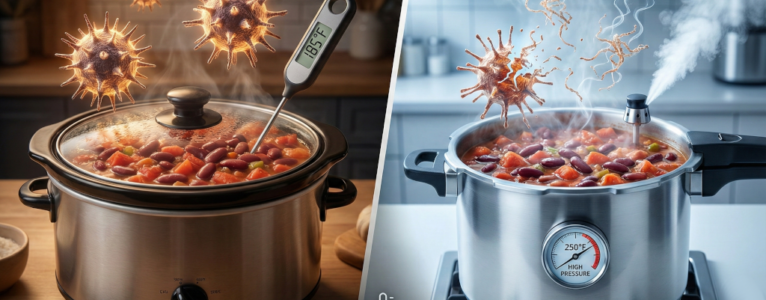
Avoiding Slow Cookers: The Science Behind Too-Low Temperatures
Slow cookers have earned a cozy reputation. They promise convenience, comfort food, and the satisfaction of letting dinner quietly make itself while you tend to the rest of your day.

The way you prepare food can dramatically change lectin levels, nutrient availability, and digestive comfort. In this category, you’ll learn essential low-lectin cooking techniques like pressure cooking, fermentation, soaking, sprouting, peeling, deseeding, and more. Each method is explained step-by-step so you can apply it confidently at home.
These guides help you transform high-lectin foods into gentler, gut-friendly options and maximize flavor along the way. If you’re looking to build your skills and master the low-lectin kitchen, start here.
Slow cookers have earned a cozy reputation. They promise convenience, comfort food, and the satisfaction of letting dinner quietly make itself while you tend to the rest of your day.
Pressure cooking has found its way back into modern kitchens, not simply for convenience, but for its powerful ability to transform foods that otherwise cause digestive distress.