For many people beginning a low-lectin lifestyle, marinara sauce feels like one of the first true losses. It is deeply woven into comfort meals, family traditions, and quick weeknight cooking. The idea of giving it up can feel unnecessary at best and discouraging at worst. But the reality is not that marinara must disappear. It simply needs to be approached differently.
Tomatoes, as part of the nightshade family, naturally contain lectins along with other compounds that can be irritating to sensitive digestive systems. These compounds tend to concentrate in the skin and seeds, and while cooking helps, it does not always fully neutralize them. That is where technique becomes more important than restriction. When we combine peeling, deseeding, and pressure cooking, we are no longer just making sauce. We are actively transforming the food into something more digestible and more aligned with healing.
What makes this version of marinara powerful is not just what is removed, but what is preserved. You still get the rich flavor, the natural sweetness, and the versatility that makes marinara such a staple. But instead of working against your gut, it begins to support it. That shift is what makes low-lectin cooking sustainable long term.
Why Pressure Cooking Changes Everything
There is a reason pressure cooking shows up repeatedly in low-lectin guidance. It is not just a convenience tool. It is a functional method that significantly reduces lectin activity by exposing food to higher temperatures than standard boiling or simmering. For foods like tomatoes, this added intensity matters.
When you pressure cook peeled and deseeded tomatoes, you are combining three layers of lectin reduction. First, removing the skin eliminates a major concentration point. Second, removing the seeds reduces another source of irritation. Third, the pressure cooking process itself breaks down remaining lectin structures more effectively than conventional cooking.
From a practical standpoint, this also changes the texture and flavor of your sauce. The tomatoes soften more completely, creating a smoother base without needing heavy processing. The natural sugars become more pronounced, which means you often need less added sweetener. And because the cooking is sealed, the aromatics you add, like garlic and herbs, infuse more deeply into the sauce.
For someone navigating digestive discomfort, this is where cooking becomes therapeutic. You are not just making food taste better. You are making it easier for your body to handle.
Choosing Ingredients That Support the Goal
A lectin-safe marinara starts with intention at the ingredient level. While tomatoes are the centerpiece, the supporting ingredients play a quiet but important role in how the sauce feels after you eat it.
Using high-quality, ripe tomatoes is key. If you are working with fresh tomatoes, choose varieties that are naturally lower in bitterness and higher in sweetness, such as Roma or San Marzano types. If fresh is not practical, look for peeled, seedless canned tomatoes that are free from additives. The fewer variables you introduce, the easier it is to control how your body responds.
Garlic is generally well tolerated and adds depth without complication. Olive oil provides a stable fat that helps carry flavor and supports satiety. Herbs like basil and oregano bring familiarity, grounding the sauce in tradition while keeping it clean.
Some people choose to add a small amount of carrot or a pinch of compliant sweetener to balance acidity. This is not about masking flavor but about reducing the need for your body to compensate for sharp acidity, which can sometimes contribute to digestive discomfort.
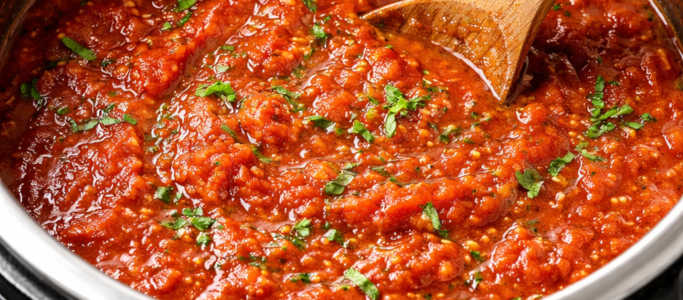
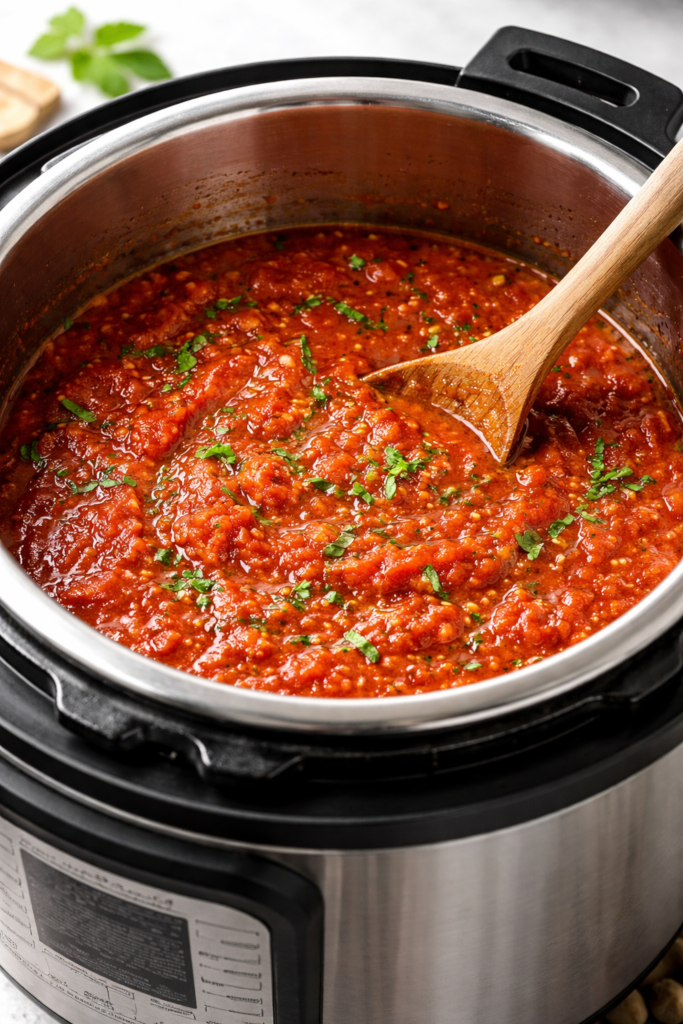
Lectin-Safe Marinara Sauce (Pressure Cooked)
Ingredients
- 2 pounds fresh Roma or San Marzano tomatoes, peeled and deseeded
- 2 tablespoons extra virgin olive oil
- 3 cloves garlic, minced
- 1 small carrot, finely grated (optional, for natural sweetness)
- 1 teaspoon dried oregano
- 1 handful fresh basil leaves, chopped
- 1 teaspoon sea salt (adjust to taste)
- 1 cup filtered water or low-lectin vegetable broth
Instructions
- Start by preparing your tomatoes. Bring a pot of water to a boil and score a small “X” on the bottom of each tomato. Blanch them for about 30 seconds, then transfer immediately to cold water. The skins will slip off easily. Cut each tomato in half and gently remove the seeds. This step is not just cosmetic. It is one of the most important parts of reducing lectin exposure.
- Set your pressure cooker to sauté mode and add the olive oil. Once warm, add the garlic and cook briefly until fragrant. Be careful not to brown it too much, as this can introduce bitterness. Add the grated carrot if you are using it and allow it to soften slightly.
- Add the prepared tomatoes, oregano, salt, and water or broth. Stir gently to combine everything. Secure the lid and cook on high pressure for 15 minutes. Once the cooking cycle is complete, allow a natural pressure release for about 10 minutes before opening.
- At this point, the tomatoes should be very soft and integrated. Use an immersion blender to achieve your desired consistency, whether smooth or slightly rustic. Stir in the fresh basil at the end to preserve its brightness.
- Taste and adjust seasoning as needed. What you should notice is a sauce that feels balanced without needing heavy correction. The sweetness, acidity, and depth should already be working together.
What Makes This Sauce Different in Your Body
The real test of any dietary shift is not how it looks on paper but how it feels after you eat. This is where many people begin to notice the difference with a lectin-conscious marinara.
Traditional marinara can sometimes lead to subtle symptoms that are easy to overlook. Bloating, mild discomfort, or a sense of heaviness after a meal are often dismissed as normal. But when those symptoms disappear or lessen significantly, it becomes clear that something was not quite right before.
With this version, the combination of preparation techniques reduces the burden on your digestive system. The absence of skins and seeds removes mechanical irritants. The pressure cooking process reduces biochemical triggers. The simplicity of the ingredient list avoids unnecessary additives that can complicate digestion.
Over time, this kind of adjustment can contribute to a more stable digestive environment. It is not about perfection or strict elimination. It is about stacking small advantages in your favor.
Integrating It Into Daily Life Without Friction
One of the biggest challenges in maintaining a low-lectin lifestyle is not knowledge. It is consistency. Recipes that are too complicated or require constant attention tend to fall out of rotation, no matter how beneficial they are.
This marinara is designed to fit into real life. You can make a larger batch and store it in the refrigerator for several days or freeze portions for later use. It works across multiple meals, from pasta alternatives to vegetable dishes to protein-based recipes.
Because the flavor is familiar, it also helps bridge the gap for family members or guests who are not following a low-lectin approach. They may not even notice the difference, which makes it easier to maintain your choices without needing to create separate meals.
This is an important psychological component. When your food still feels like food you enjoy, the lifestyle becomes sustainable rather than restrictive.
The Bigger Picture: Food as a Process, Not Just an Ingredient
What this recipe ultimately represents is a shift in how we think about food. Instead of categorizing ingredients as simply good or bad, we begin to look at how preparation changes their impact. A tomato is not inherently a problem. But how it is handled determines how your body responds.
This perspective opens the door to more flexibility and less fear. It allows you to reintroduce foods in a way that supports your goals rather than undermines them. It also encourages experimentation. Once you understand the principles behind peeling, deseeding, and pressure cooking, you can apply them to other foods and recipes.
In many ways, this is where the low-lectin lifestyle becomes empowering. You are no longer just following rules. You are developing a skill set that lets you shape your diet in a way that works for you.
Closing Thoughts: Bringing Comfort Back to the Table
There is something deeply satisfying about reclaiming a dish that once felt off-limits. Marinara sauce is more than just a recipe. It is a symbol of comfort, simplicity, and connection. Being able to bring it back into your kitchen without compromise is a meaningful step.
This lectin-safe version is not about perfection or strict adherence. It is about creating a version of a familiar food that aligns with how you want to feel. When you sit down to a meal and experience both enjoyment and ease, that is when you know you are on the right track.
And in the end, that is what this lifestyle is really about. Not restriction, but refinement. Not loss, but rediscovery.